A catch basin may look like nothing more than a metal grate set into pavement or lawn, but it can be the feature that keeps a heavy rain from turning into a flooded driveway, soggy lawn, or water-stained foundation. The catch basin purpose is straightforward: collect stormwater where it naturally gathers, catch debris before it travels farther through the drainage system, and move water safely away from the property.
For homeowners and commercial property managers, that job matters most during the storms that expose every low spot, poorly graded surface, and overwhelmed downspout. A properly placed, well-maintained catch basin protects the outdoor improvements you have invested in, from paving and walkways to lawns, retaining walls, and building foundations.
What Is the Purpose of a Catch Basin?
A catch basin is a drainage structure installed at a low point in a landscape, driveway, parking area, or other hard surface. Water enters through the grate at the top, then drops into a box or chamber below ground. An outlet pipe carries the water to a designated discharge point, dry well, drainage line, or approved stormwater system.
The basin does more than accept water. Its lower chamber acts as a small trap for sediment, leaves, mulch, sand, and other debris. Heavier material settles at the bottom instead of immediately washing into the outlet pipe. That reduces the chance of a clogged drainage line and makes cleaning more manageable.
The catch basin purpose is not to make water disappear. It is to control where water goes and how it gets there. That distinction is essential. If the basin is too small, installed in the wrong location, connected to an undersized pipe, or draining toward an area that cannot handle more water, puddling can still occur.
How a Catch Basin Protects Your Property
Stormwater follows gravity. On a well-planned property, that water is directed away from structures, paved surfaces, and areas where people walk or drive. A catch basin gives the water a planned entry point before it spreads across the site.
It helps prevent standing water
Standing water is more than an inconvenience. A soaked lawn can develop thin turf, muddy tracks, and mosquito activity. On a commercial property, puddles at entrances, loading areas, or parking spaces can create an unprofessional appearance and a slip hazard.
A catch basin placed at a recurring low spot can collect runoff before it pools. This is particularly useful at the bottom of a sloped driveway, beside a patio, near a garage entrance, or in a parking lot where water consistently collects after rain.
It reduces pressure near foundations
Water that repeatedly sits against a foundation can contribute to basement moisture, erosion around the home, and damage to nearby landscaping. A catch basin can intercept runoff from a paved area or slope before that water reaches the building.
It is only one part of a sound drainage plan. Downspouts, final grading, swales, drainage pipes, and discharge locations must all work together. Still, when water has one predictable place to collect, a properly designed basin can make a major difference.
It protects pavement and hardscaping
Water that settles along a driveway edge or under patio pavers can weaken the base material below. Over time, that can lead to settling, shifting pavers, cracking, or washouts. Masonry features and retaining walls also need proper drainage behind and around them to perform as intended.
Capturing runoff early helps preserve the stable base that hardscape work depends on. It is a practical detail that supports a cleaner-looking, longer-lasting property.
Catch Basin Purpose in Connecticut Yards and Parking Areas
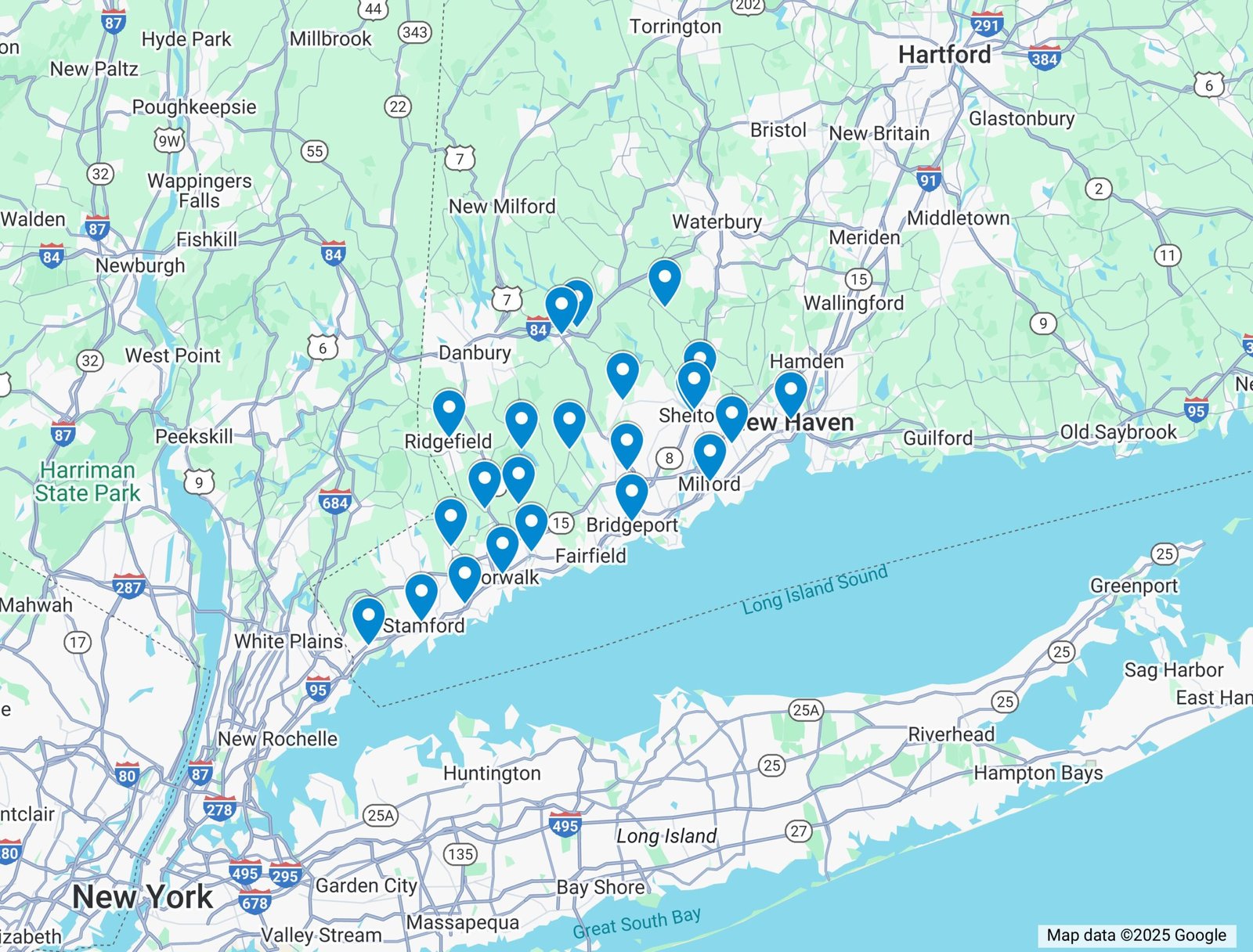
In Fairfield and Westport, properties often have a mix of mature landscaping, paved driveways, compact lot layouts, and changing grades. Heavy seasonal rain can move quickly across these surfaces. If a driveway slopes toward the house, a patio meets a lawn at the wrong elevation, or a parking area drains toward a building, water problems can appear fast.
Freeze-thaw cycles add another concern. Water that seeps into small pavement cracks or poorly supported areas can freeze, expand, and worsen the damage over time. Keeping runoff moving through a functional drainage system helps limit that cycle.
Older properties may also have drainage systems that no longer match current site conditions. A driveway expansion, new patio, landscaping changes, added roof runoff, or years of accumulated sediment can change how water travels. The basin that worked years ago may now be clogged, undersized, or simply in the wrong place for the way the property is used.
Catch Basins, Yard Drains, and Trench Drains: What Is the Difference?
These drainage solutions serve related but different jobs. A catch basin is usually a square or round collection box with a grate, installed at a concentrated low point. It is a good fit when runoff funnels to one area.
A yard drain is often used more broadly to describe a grated drain in a lawn or landscape bed. Some yard drains are catch basins, while others are simpler drain inlets connected directly to pipe. The right option depends on the amount of runoff, debris exposure, pipe layout, and discharge plan.
A trench drain is a long, narrow channel with a continuous grate. It is often installed across the width of a driveway, garage entrance, pool deck, or commercial threshold where water approaches along a broad line instead of one low point.
There is no single best drain for every site. A catch basin can be an excellent solution for localized pooling, but a trench drain may work better across a sloped driveway. In other cases, regrading the yard and extending downspouts may solve the problem without adding a basin at all.
Signs Your Catch Basin Needs Attention
A basin cannot do its job if the grate is buried, the chamber is packed with sediment, or the outlet pipe is blocked. Drainage issues often develop gradually, then become obvious during the next major storm.
Watch for water that pools around the grate instead of draining, a basin that overflows during moderate rain, foul odors from trapped organic debris, or visible leaves and mud filling the chamber. Slow drainage at a driveway or parking lot low point can also indicate a clogged outlet pipe rather than a problem with the grate itself.
Other warning signs are more indirect. Erosion around a drain, sinking pavement nearby, wet spots that linger long after rainfall, and water flowing back toward a building deserve a closer look. These conditions may point to a failed connection, broken pipe, poor grade, or drainage system that cannot handle the volume of water reaching it.
Catch Basin Maintenance Is Simple but Necessary
The grate should be kept clear of leaves, grass clippings, mulch, and snow buildup. During fall leaf season or after a major storm, a quick check can prevent a small blockage from becoming a flooded area.
The basin chamber also needs periodic cleaning. The frequency depends on the location. A basin under trees, beside a gravel drive, or near a busy commercial parking area will collect debris faster than one in a protected landscape bed. Removing sediment from the bottom helps preserve the basin’s debris-trapping capacity and keeps material from reaching the outlet pipe.
Do not assume surface cleaning is enough if drainage remains slow. A blocked or collapsed pipe may require professional inspection and repair. For deeper cleaning, excavation, pipe replacement, or correcting a drainage slope, the work should be planned carefully so the repair protects surrounding pavement, landscaping, and utilities.
When Installation or Replacement Makes Sense
New catch basin installation may be appropriate when a property has a consistent low spot, runoff reaches a garage or foundation, or water crosses a driveway and creates unsafe conditions. Replacement may make sense when an old concrete basin is cracked, the grate is damaged, the pipe connection has failed, or repeated cleaning no longer restores proper drainage.
A successful installation starts with identifying the source of the water, not just the puddle. Roof runoff, driveway slope, neighboring grades, soil conditions, and the available discharge area all affect the design. The basin must sit at the right elevation and connect to a drainage route that can carry water away without causing a new problem elsewhere.
That is why drainage work often overlaps with excavation, grading, paving, and landscaping. A team that can assess the full site can address the cause while restoring the finished appearance of the property. Innovative Landscaping Services LLC helps property owners coordinate those pieces without juggling separate crews for excavation, drainage, and exterior improvements.
If water keeps finding the same low point after every storm, treat it as a message from your property. A properly planned catch basin can turn that trouble spot into a controlled drainage path and help you enjoy your outdoor space with far less worry when the forecast calls for rain.