A wet basement corner, a lawn that stays soft for days, or a patio puddle that never seems to disappear is more than an inconvenience. Water is often telling you that it has no reliable place to go. Professional drainage installation gives runoff a controlled path away from the areas that matter most, helping protect your foundation, landscape, hardscaping, and day-to-day use of the property.
For homeowners and property managers, the goal is not simply to move water somewhere else. It is to create a system that works with the grade of the land, the existing structures, and the way the property is used. Done correctly, drainage work can make an outdoor space cleaner, safer, healthier, and far easier to enjoy after a Connecticut rainstorm.
Why Water Problems Should Not Wait
Water follows gravity, but it also finds weak points. It settles in low lawn areas, runs toward a foundation, washes soil out from beneath a walkway, and freezes along driveways during cold weather. What begins as a small puddle can eventually turn into eroded beds, damaged turf, shifting pavers, cracking masonry, or moisture concerns inside the building.
The right solution depends on where the water starts, where it travels, and what lies beneath the surface. A downspout that empties beside the house may be part of the issue. So may an improperly sloped yard, compacted soil, a failing catch basin, or runoff coming from a neighboring grade. Treating only the visible puddle can leave the actual cause in place.
This is why a site review matters. Before installing pipe or stone, an experienced crew should look at elevation changes, existing drainage routes, roof runoff, soil conditions, underground utilities, and nearby patios, walls, driveways, and planting areas. The plan needs to solve the water problem without creating a new one at the edge of the property.
Common Signs You Need Drainage Installation
Some drainage issues are obvious after the first heavy storm. Others develop slowly and become part of the landscape until the damage is hard to ignore. If you see several of the following conditions, it is worth scheduling an assessment:
- Water pooling near the foundation, garage, patio, or walkways
- Muddy lawn areas that remain saturated long after rain stops
- Soil, mulch, or gravel washing away from beds and slopes
- Downspouts discharging directly against the home or commercial building
- Standing water around catch basins, driveway edges, or low parking areas
- Ice forming repeatedly where people walk or vehicles enter
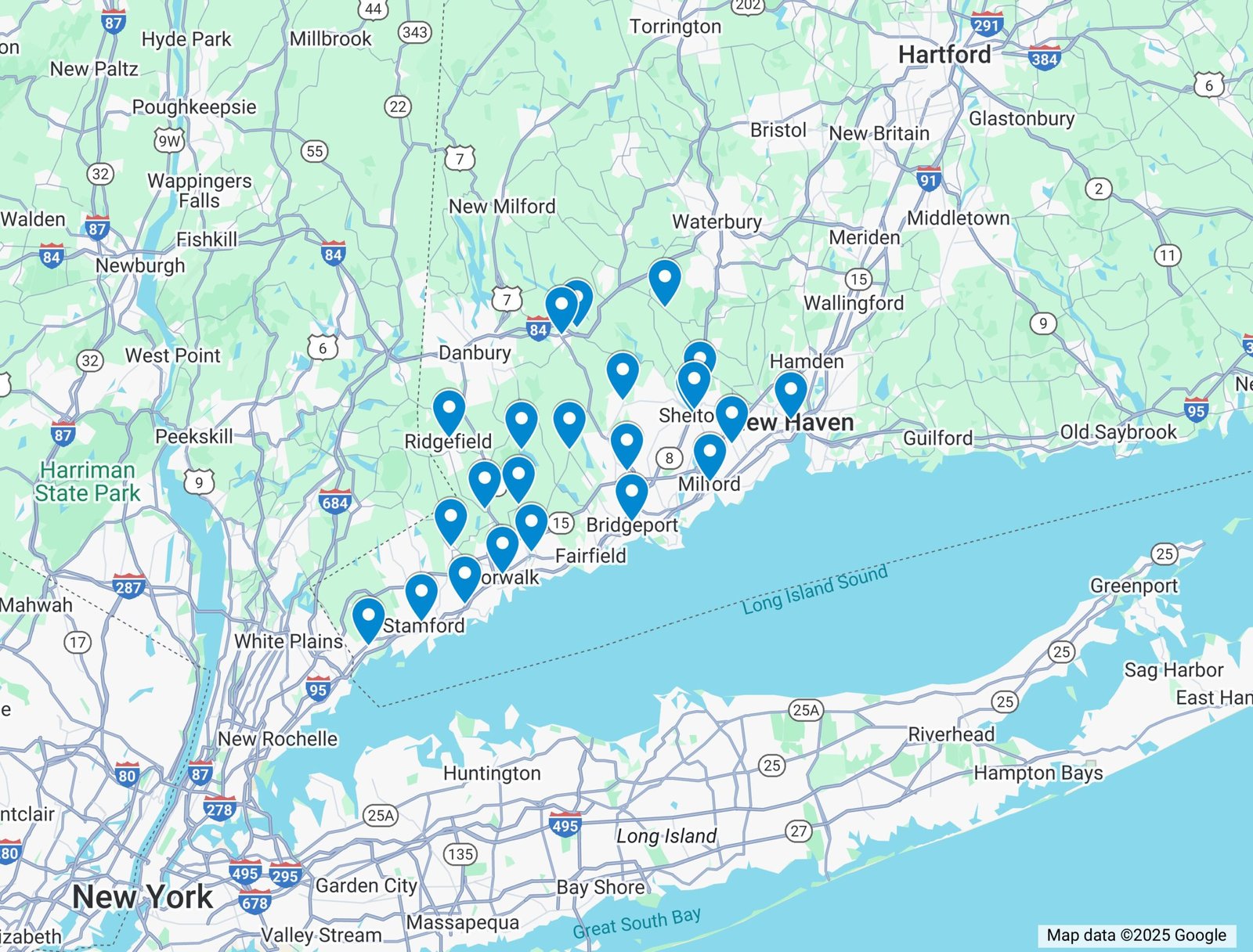
In Fairfield and Westport, properties often combine mature landscaping, established homes, stone features, and uneven terrain. That makes a one-size-fits-all fix especially risky. A drain line must be placed and pitched correctly, with a discharge point that can handle the volume of water without undermining the surrounding yard or hardscape.
Choosing the Right Drainage Solution
A drainage system is not a single product. It is a set of components selected for the property and installed as one working system. In some cases, simple downspout extensions and grading improvements are enough. In others, the project calls for excavation, drain pipe, drainage stone, fabric, collection basins, or surface channels.
French Drains for Saturated Ground
A French drain is commonly used when groundwater or surface water keeps a lawn, planting bed, or area near a structure too wet. The system typically uses a perforated pipe set in clean drainage stone and wrapped with filter fabric. Water enters through the stone, flows into the pipe, and moves toward an approved discharge location.
French drains can be highly effective, but details matter. The trench needs the right depth and slope. The pipe must remain protected from soil intrusion. And the outlet must be planned carefully. A poorly installed drain can clog, hold water, or send it to a location that creates another problem.
Catch Basins and Area Drains for Surface Runoff
When water collects in a specific low spot, such as the bottom of a driveway or beside a patio, a catch basin or area drain may be the better option. These systems collect water at the surface and carry it away through solid pipe.
They are often useful around paved areas because hard surfaces shed water quickly. A properly located basin can help keep runoff from crossing a walkway, spilling into a garage, or pooling where it can freeze. The grate must be sized and positioned to receive water naturally, not fight against the slope of the site.
Grading for the First Line of Defense
In many drainage projects, the most valuable improvement is reshaping the land. Proper grading directs water away from structures before it has the chance to collect. This may involve removing excess soil, building up low areas, adjusting the edges of a patio, or restoring the transition between lawn and driveway.
Grading is also a key part of preparing for new outdoor improvements. Before installing a patio, retaining wall, walkway, or outdoor kitchen, it makes sense to address water movement. Building beautiful hardscaping over unresolved drainage issues can lead to settlement, staining, or damage that is expensive to correct later.
Downspout Drainage That Keeps Water Moving
Roof runoff is concentrated water. During a heavy storm, even a modest roof can send a surprising amount of water through each downspout. If that water drops beside the foundation, it can saturate the soil exactly where you want it driest.
Buried downspout lines carry roof water away from the building and can connect to a suitable outlet or drainage system. The line must be installed with enough pitch, protected from crushing, and kept separate from systems that should not receive roof runoff. Accessibility also matters, because cleanouts can make future maintenance much easier.
What a Professional Drainage Installation Process Looks Like
Good drainage work starts before the excavation equipment arrives. The crew should identify the water source and confirm a practical outlet. They should also account for utility markings, landscape features, access for equipment, and restoration needs once the work is complete.
During installation, excavation is completed to the required depth and slope. The crew installs the appropriate pipe, stone, basins, fabric, or channel drains, then checks that each connection and discharge route functions as planned. The area is backfilled and restored with attention to the lawn, beds, pavement, or hardscape around it.
Owning the right equipment helps keep this work efficient and controlled. Drainage often overlaps with excavation, land clearing, masonry, and landscape restoration. Working with one capable outdoor contractor can reduce scheduling delays and prevent the handoff problems that happen when separate crews are responsible for the digging, pipe work, grading, and final finish.
Drainage Work and Property Appearance Can Work Together
A drainage solution should protect the property without making the yard look like a construction site forever. With thoughtful planning, basins can be placed discreetly, pipes can be concealed below finished grades, and restored landscape areas can blend into the surrounding property.
There are trade-offs. A surface channel drain may be more visible than a buried system, but it can be the most direct answer for water crossing a patio or entry. A deeper drain can offer better collection in some locations, but it may require more excavation and restoration. The best choice balances performance, budget, access, and the appearance you want when the project is finished.
For commercial properties, appearance is part of performance. Water collecting at entrances, sidewalks, drive lanes, and parking areas can create safety concerns and leave a poor impression. A well-planned drainage system supports a cleaner, more professional exterior while helping protect pavement, landscaping, and building edges.
Protect the Work With Smart Maintenance
Drainage systems are designed to handle water, not neglect. Keep catch basin grates clear of leaves, mulch, and debris so water can enter freely. Check downspout connections after major storms, especially where extensions meet buried lines. If a previously dry area begins holding water again, address it early rather than waiting for the next season.
Landscaping changes can also affect drainage. Adding a patio, raising a garden bed, installing edging, or bringing in topsoil may change the direction of runoff. Before making major outdoor upgrades, consider how the new work will interact with existing grades and drain lines.
The right drainage project gives your property a better foundation for everything that comes next, from a healthier lawn to a new patio or a more dependable commercial exterior. If water is taking over parts of your yard or site, a clear plan and precise installation can turn a recurring headache into an outdoor space you can use with confidence.